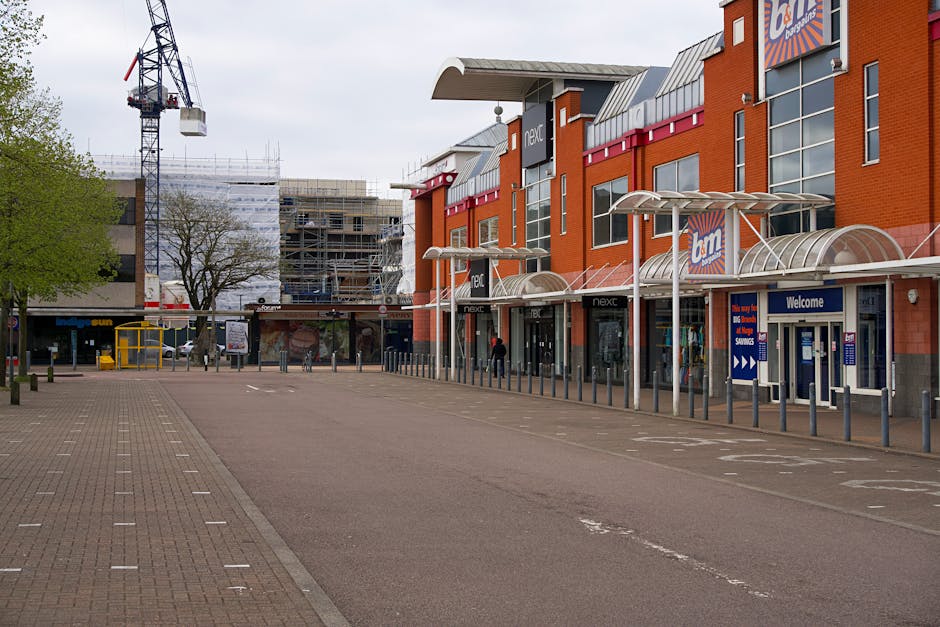
Ealing Road shop clearance: quick rubbish plans for Alperton
If you run, manage, or are simply trying to hand back a retail unit near Ealing Road, you already know the feeling: stock to sort, old displays to move, boxes piling up, and a deadline that does not care how busy your week is. Ealing Road shop clearance: quick rubbish plans for Alperton is really about getting control of that mess without turning the place upside down. The goal is simple - clear the unit safely, quickly, and with as little disruption as possible.
In practice, that means making a smart plan for unwanted shop furniture, packaging, broken fixtures, shelving, general rubbish, and anything else that has quietly built up at the back of the premises. Done well, a clearance saves time, reduces stress, and helps you leave the space presentable for landlords, tradespeople, or the next tenant. Done badly, it becomes one of those jobs that somehow takes all day and still feels unfinished. Let's make sure you avoid that.
Below, you'll find a practical guide to planning a fast shop clearance in Alperton, what to expect, where businesses often go wrong, and how to keep the whole job organised from the first sweep to the final bag. If you need broader support across the site, it can also help to look at business waste removal, office clearance, or general waste removal depending on what you are clearing.
Table of Contents
- Why Ealing Road shop clearance: quick rubbish plans for Alperton Matters
- How Ealing Road shop clearance: quick rubbish plans for Alperton Works
- Key Benefits and Practical Advantages
- Who This Is For and When It Makes Sense
- Step-by-Step Guidance
- Expert Tips for Better Results
- Common Mistakes to Avoid
- Tools, Resources and Recommendations
- Law, Compliance, Standards, or Best Practice
- Options, Methods, or Comparison Table
- Case Study or Real-World Example
- Practical Checklist
- Conclusion
- Frequently Asked Questions
Why Ealing Road shop clearance: quick rubbish plans for Alperton Matters
Retail spaces are different from homes. They have more varied waste streams, more awkward items, and usually less margin for error. A shop clearance on or near Ealing Road often includes stockroom waste, damaged shop fittings, old signage, display units, packaging, cardboard, broken chairs, mixed rubbish, and sometimes leftover items from a refit. One forgotten corner can slow the whole job down. Not ideal when the landlord is waiting or the opening of another business is around the corner.
For Alperton shops, speed matters, but so does tidiness. A rushed job that leaves debris behind can create complaints, trip hazards, and extra cost. A proper quick-rubbish plan is not about throwing things in a van and hoping for the best. It is about sorting waste into sensible groups, choosing the right method for each type of item, and leaving the unit in a state that makes the next step easier.
There is also a local reality to consider. Busy roads, limited loading space, and the pressure of keeping access clear can make even a small clearance feel more complicated than it should. That is why a planned approach is usually better than a last-minute one. In our experience, the places that go smoothly are the ones that decide early what stays, what goes, and what needs special handling. Simple, but it works.
Practical takeaway: the fastest shop clearances are usually not the ones that move the fastest physically; they are the ones that are sorted fastest on the front end.
If the property includes stockroom overflow or upstairs storage, it may also be worth checking flat clearance or loft clearance style services where the space is tight and access needs care. That is often the bit people forget until they are standing in front of a heavy shelf unit on a narrow staircase. Truth be told, nobody enjoys that moment.
How Ealing Road shop clearance: quick rubbish plans for Alperton Works
A quick rubbish plan for a shop clearance usually follows a straightforward sequence. First, the premises are assessed. Then the items are grouped by type and priority. After that, the useful or recoverable items are separated from general waste and bulky rubbish. Finally, the clearance team removes everything in a controlled way and leaves the site swept through and ready for whatever comes next.
The exact method depends on the size of the unit and what is inside it. A small kiosk with a few counters and packaging waste is one thing. A larger retail space with old shelving, broken refrigeration units, storage tubs, and a back room full of mixed rubbish is another altogether. The plan needs to match the job, not the other way round.
Here is the basic flow:
- Walk through the shop and identify everything that must be removed.
- Separate retail waste, furniture, fixtures, packaging, and recycling where possible.
- Flag anything awkward, heavy, sharp, or potentially hazardous.
- Decide whether the clearance needs same-day support, staged removal, or out-of-hours work.
- Arrange transport, loading access, and any building permissions if required.
- Remove items safely, keeping walkways open and the site controlled.
- Do a final check so nothing small, hidden, or valuable has been left behind.
That final check matters more than people expect. A missed shelf bracket, loose cable, or box tucked behind the counter can become a nuisance later. A good team will slow down just enough at the end to avoid that. Not glamorous, but smart.
If the project is part of a wider commercial move, the broader service pages on office clearance and business waste removal can help you map out what happens to different categories of waste.
Key Benefits and Practical Advantages
The main benefit of a well-planned shop clearance is time saved. But there are several other advantages that matter just as much, especially when the unit is on a busy road or part of a larger commercial street in Alperton.
- Less disruption: a planned clear-out keeps foot traffic, staff movement, and loading under control.
- Better use of labour: nobody wants three people standing around while one person figures out where to start.
- Cleaner handover: a neat space makes inspections, decorating, repairs, or re-letting much easier.
- Improved safety: removing clutter reduces trip hazards, blocked exits, and awkward lifting situations.
- Stronger recycling outcomes: separating reusable and recyclable items avoids sending everything to mixed waste unnecessarily.
- Less stress: a clear plan gives you something to follow instead of improvising under pressure.
There is also a financial angle. A tidy and efficient clearance often avoids extra labour, extra van trips, and the sort of hidden inefficiencies that quietly eat into a budget. You may not notice them at first, but they add up. Especially on jobs where the clock is already ticking.
For items like counters, shelving, desks, or displays that are still in reasonable condition, it can make sense to look at furniture clearance or furniture disposal options, depending on whether reuse, removal, or disposal is the best route.
Who This Is For and When It Makes Sense
This kind of clearance is not just for big retail chains. It is useful for a wide range of people and situations in and around Alperton.
Common situations where a quick shop clearance helps
- A shop is closing down and the lease needs to be handed back fast.
- A new tenant is taking over and the unit needs emptying before fit-out work begins.
- A refit has created piles of old displays, packaging, and offcuts.
- Storage has drifted out of control in the back of the premises.
- Broken stockroom furniture or damaged fixtures need to be removed quickly.
- The shop needs a reset after a busy period, sale event, or stock changeover.
It also makes sense when you do not want staff spending hours moving rubbish instead of serving customers or preparing stock. That sounds obvious, but it is one of the most common reasons people leave the job too long. A team of shop workers can clear a lot, sure, but it is rarely the best use of their day. To be fair, they have enough to do already.
Retailers, landlords, managing agents, and fit-out contractors all use these services for different reasons. A landlord wants the space ready. A tenant wants to leave cleanly. A contractor wants access. The job is the same shape, but the priorities shift a little depending on who is asking.
For small business owners, it can also be helpful to review pricing and quotes before making a decision, especially if the clearance needs to fit around a rent date, closing date, or refit schedule.
Step-by-Step Guidance
If you want the quickest route from cluttered shop to clear space, follow a process. The job gets easier once the decisions are broken down into bite-sized steps.
1. Walk the unit and make a simple inventory
Start with a slow walk through the front area, stockroom, and any upper or rear storage. Make a note of large items, mixed waste, recyclables, and anything that might need special handling. You do not need a perfect spreadsheet. A clear list on paper can be enough.
2. Separate what stays from what goes
This is the key moment. Be strict. A clearance gets messy when "maybe keep" items linger in the middle of the floor. If a shelf unit is going, say so. If a display cabinet is going to another branch, label it clearly. If it is rubbish, get it into the rubbish pile. Simple rules save time later.
3. Identify awkward or sensitive items
Look for glass, sharp metal edges, heavy counters, wet materials, and anything that may contain electrical parts or residues. If the unit includes a fridge, freezer, or other appliance, treat it separately and check how it should be moved or disposed of. This is where a careful plan is worth its weight.
4. Choose the right removal method
Some clearances are best handled in one visit. Others work better in stages. If the shop is still trading, out-of-hours work may reduce disruption. If the unit is empty already, same-day loading may be possible. The right choice depends on access, volume, and timing.
5. Keep the loading route clear
Think about doorways, stairs, corridors, parking, and where a vehicle can stop without causing problems. A short loading route is usually better than trying to carry items through a crowded front area. If possible, protect floors and walls along the path. It saves arguments, and scrapes, and awkward apologies.
6. Remove, sweep, and review
Once the waste is out, do a final sweep for forgotten pieces, loose packaging, or items left behind under counters. A quick look in cupboards and corners can save a second visit. That final five minutes is often the difference between "done" and "nearly done".
Expert Tips for Better Results
A few small habits can make a shop clearance much smoother. These are the sorts of things people learn after a few commercial jobs, usually the hard way.
- Label everything early. Even a rough label helps when several people are working at once.
- Start with the easiest waste first. Clearing loose rubbish and packaging opens up floor space fast.
- Move in zones. Front area, stockroom, shelving, counters, back office - one zone at a time.
- Keep a "do not touch" area. It reduces accidental removal of items that are staying.
- Plan for heavy items before you start. The last thing you want is to discover a bulky cabinet after the smaller rubbish has already been loaded.
- Leave room for sorting. A tiny clear space near the entrance can become your staging area.
One practical tip that often gets overlooked: make sure the person making decisions is actually available on the day. Otherwise the crew stands there waiting while someone texts "yes, take that one too" from another site. Not the end of the world, but it slows everything down.
If you are dealing with old stockroom shelves, reception furniture, or awkward broken pieces, the pages for furniture clearance and home clearance can help you think about item-by-item removal where a mixed approach makes sense.
Common Mistakes to Avoid
Most clearance problems come from rushing the first ten minutes. That is the honest truth. Once the pile starts moving, the rest of the job becomes easier or harder depending on how well it began.
Leaving sorting until the end
If you wait until the van is there before deciding what goes, the job usually slows down. Sorting on the fly creates confusion and can lead to mixed waste that should have been separated.
Underestimating hidden waste
Shops often have more rubbish than they first appear to. Behind counters, under shelves, and inside cupboards, there is usually more than meets the eye. A quick glance is not enough.
Forgetting access issues
Narrow stairwells, tight entrances, loading restrictions, and parking problems can all bite. It sounds basic, but access is where many "quick" jobs lose momentum.
Ignoring special items
Electrical items, fixtures with wiring, and anything that could be classed as sensitive waste should be flagged early. Not because it is dramatic, but because it avoids mistakes and delays.
Trying to do everything with the shop still fully operational
That can work sometimes, but it is often a headache. If customers are in and out, or if staff need continuous access to stock, the clearance becomes slower and a bit messy. Sometimes closing the unit for a short window is the cleaner choice.
And one more thing: if the job feels bigger than a quick sweep and load, it probably is. Better to say so early than pretend otherwise and end up with a half-finished room and a tired team.
Tools, Resources and Recommendations
Good tools do not make a poor plan good, but they do make a decent plan work better. For a shop clearance in Alperton, the most useful resources are often very ordinary.
- Labels and marker pens: for items to keep, move, recycle, or remove.
- Heavy-duty sacks and boxes: useful for loose waste, packaging, and smaller mixed items.
- Protective gloves: a basic but important safeguard when handling rough or sharp materials.
- Floor protection: especially useful if you are moving bulky furniture across finished surfaces.
- Dust sheets or covers: helpful where dust or debris might spread during staged removal.
- Phone photos: take a few before-and-after shots for records, landlord discussions, or contractor coordination.
For readers comparing service options, waste removal is often the broadest starting point, while builders waste clearance is more useful if the shop has also had a refit or strip-out. If you are clearing a business premise rather than a shop specifically, business waste removal gives a more rounded fit.
From an operational point of view, it is often sensible to ask how the team handles recycling, loading, and responsible disposal. You do not need a lecture. Just a clear, practical explanation. That is usually enough to tell whether the service suits the job.
Law, Compliance, Standards, or Best Practice
For shop clearance work in the UK, the key thing is to use a lawful, responsible approach to waste. That sounds dry, but it matters. Businesses remain responsible for how their waste is handled, so it is sensible to use a provider that can explain what happens to the material they collect and how they manage disposal or recycling.
Best practice usually includes:
- keeping clear records of what is removed where appropriate;
- separating recyclable items where practical;
- handling sharp, heavy, or awkward objects safely;
- avoiding fly-tipping or informal dumping arrangements;
- protecting staff, contractors, and the public during loading;
- using clear terms so everyone understands scope, access, and responsibility.
If you are arranging a clearance that involves staff areas, customer areas, or mixed-use premises, it is wise to review safety information before the job starts. Pages such as health and safety policy, insurance and safety, and terms and conditions can help clarify expectations. For payment-related reassurance, payment and security is also worth checking.
Where sustainability is a priority, look for sensible reuse and recycling practices rather than vague green claims. A realistic recycling approach is better than a flashy promise. The page on recycling and sustainability is a good place to understand that side of the service.
Options, Methods, or Comparison Table
Not every shop clearance needs the same method. Sometimes the best approach is a full-service collection. Other times, a phased clear-out makes more sense. Here is a simple comparison to help you decide.
| Method | Best for | Strengths | Watch-outs |
|---|---|---|---|
| Same-day clearance | Urgent handovers, last-minute closures, fast tidy-ups | Very quick, minimal waiting, ideal for deadlines | Needs good access and clear decisions on the day |
| Staged clearance | Larger shops, mixed stock, phased moves | More controlled, easier sorting, less disruption | Takes longer overall and needs coordination |
| Full strip-out support | Empty units, refits, end-of-lease projects | Removes bulky items and leftover clutter efficiently | May need extra planning for fixtures and fittings |
| Selective removal | When some fittings or stock must stay | Flexible and precise | Requires clear labelling and on-site decisions |
A lot of shop owners settle on a mix of these approaches. That is perfectly normal. One back room might need immediate clearance, while the front display units are being reused elsewhere. Mixed jobs are common, and they are rarely a problem if the plan is clear from the start.
If the premises include a garage, rear yard, or overflow storage, it may also be useful to compare with garage clearance or garden clearance for external items that have been stored there over time. Shop premises collect odd things. You know how it goes.
Case Study or Real-World Example
Imagine a small retail unit near Ealing Road that has just finished a seasonal trading cycle. The front of the shop has a few old display stands, the stockroom has flattened boxes and damaged packaging, and the back corner has three broken shelves plus a heavy counter no one wants to deal with. The owner needs the place cleared before a new fit-out begins on Monday morning.
The sensible approach is straightforward. The owner marks the items that must go, separates anything reusable, and confirms access for a vehicle close to the unit. Packaging and loose waste come out first, which quickly opens up the floor. The bulky shelves and counter are then handled while the walkway is clear. A final sweep catches the small stuff under the counter and behind the till area.
What made the difference? Not speed alone. Planning. The owner made decisions in advance, kept the route clear, and did not treat the clearance like one huge pile. That meant the job stayed calm even though the deadline was tight. It was over before lunch, and the unit was ready for the next trade team. Not magic. Just good organisation.
If you are dealing with a similar commercial handover, it can help to speak with a team that also handles house clearance and flat clearance because those services often reflect the same careful approach to sorting, lifting, and leaving spaces tidy.
Practical Checklist
Use this before the clearance starts. It keeps the job grounded and avoids that awful feeling of missing something obvious halfway through.
- Confirm which parts of the shop need clearing.
- Decide what stays, what goes, and what may be reused elsewhere.
- Identify bulky furniture, fixtures, and awkward items early.
- Separate packaging, cardboard, mixed rubbish, and recyclables where possible.
- Check access, parking, stairs, lift use, and loading space.
- Remove fragile or sharp items with extra care.
- Arrange any out-of-hours or low-disruption timing if customers are still coming in.
- Keep important documents, cash, devices, and personal items well away from the clearance zone.
- Take a few photos before work begins.
- Do a final sweep of shelves, corners, drawers, and behind counters.
Useful short version: sort first, move second, sweep last.
That one line solves more problems than people think.
Conclusion
Ealing Road shop clearance: quick rubbish plans for Alperton works best when you treat it like a practical project, not a last-minute clean-up. Decide what is being removed, separate waste properly, think through access, and keep the process simple. That is how you avoid delays, reduce stress, and leave the unit ready for the next stage.
For many local businesses, the real win is not just getting rid of rubbish. It is getting the space back to a condition where people can work, decorate, inspect, or reopen without tripping over old fixtures and forgotten boxes. A good clearance should feel calm, efficient, and a bit of a relief, honestly.
If you want a cleaner handover, a faster turnaround, or simply a more organised way to deal with bulky shop waste, speak to a local team that understands commercial clearances and the pace of work around Alperton. The right help saves time, and sometimes your sanity too.
Get a free quote today and see how much you can save.
And if you want to learn more about the people behind the service, or explore related support, you can also visit about us or head straight to contact us. A quick conversation now can make the whole job feel much lighter.
Frequently Asked Questions
What does a shop clearance in Alperton usually include?
It usually includes removal of general rubbish, packaging, old fixtures, display units, damaged furniture, stockroom clutter, and any bulky items that need safe loading and disposal. The exact scope depends on the premises.
How fast can a quick shop rubbish plan be arranged?
In many cases, very quickly, provided the access is clear and the items to be removed are identified in advance. The more decisions you make before the team arrives, the faster the job tends to move.
Can I keep some shop fittings and only remove the waste?
Yes, and that is common. A selective clearance works well when some counters, shelving, or display items are staying. Clear labelling helps avoid mistakes.
What happens to reusable furniture or fixtures?
That depends on condition and the agreed service. Some items may be suitable for reuse or separate furniture clearance, while others will be treated as disposal items.
Is a shop clearance different from office clearance?
Yes, but they overlap. Shops often have more mixed retail waste, fixtures, and display equipment, while offices usually focus more on desks, chairs, files, and workstations. Both need organised planning.
Do I need to sort recycling before the clearance?
It helps, but it is not always essential if the provider can separate materials on site. Still, cardboard, packaging, and obvious recyclables are worth grouping where practical.
What if the shop has bulky or awkward items?
Flag them early. Large counters, metal shelving, glass cabinets, and heavy stockroom units should be listed before the job starts so the right lifting and access plan can be used.
Can shop clearances be done outside business hours?
Often, yes. Out-of-hours work can be useful if the shop is still trading or if you want to minimise disruption. It depends on access, building rules, and scheduling.
How do I know if a clearance provider is a safe choice?
Look for clear safety information, sensible terms, and straightforward explanations about how waste is handled. Pages like health and safety policy and insurance and safety are good signs that the business takes those responsibilities seriously.
What should I do before the team arrives?
Separate items to keep, make access as easy as possible, and remove anything personal or sensitive. A short walk-through the day before can save a surprising amount of time.
Can a clearance help with end-of-lease handover?
Yes. A proper clearance makes handover much easier because the unit is empty, tidy, and ready for inspection or repair work. That is often the point where the value becomes obvious.
Where can I check pricing or ask for a quote?
You can start with pricing and quotes and then use the contact page to discuss the details of your shop clearance in Alperton.